

Speaking to SostenibileOggi, the founder and CEO of Helping People Help argues that prompt engineering, critical thinking and ethical governance will shape the next phase of artificial intelligence adoption
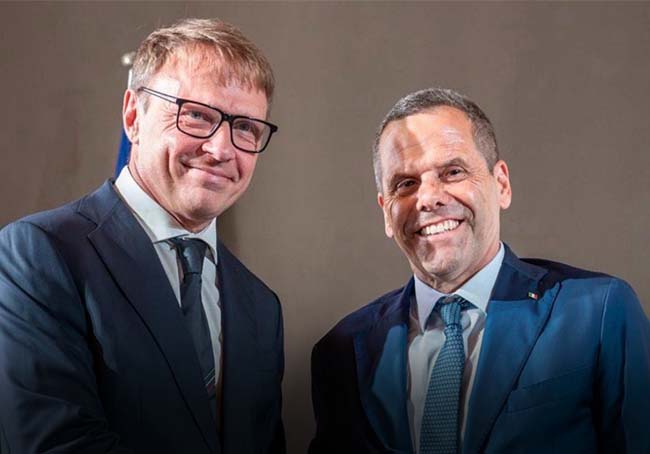
Artificial intelligence is rapidly becoming part of everyday professional life, yet much of the public conversation remains focused on the technology itself rather than on the skills required to use it effectively. According to Darian Rodriguez Heyman, founder and CEO of Helping People Help, and a leading voice on nonprofit innovation organizations should pay closer attention to critical thinking and prompt engineering, two capabilities that will increasingly shape how people work alongside AI systems.
“People get confused when they hear terms like ChatGPT or Generative Pre-trained Transformer,” Heyman told SostenibileOggi during Festival of Fundraising in Riccione, Italy. “For me, AI is a general-purpose technology. It can help almost anyone with almost anything. The skills that matter most are critical thinking and prompt engineering — knowing how to speak with AI to get the results you want.”
The skills that matter in an AI-powered world: conversation with Darian Rodriguez Heyman
For Heyman, artificial intelligence should be understood as part of a long line of technologies that transformed the way people work. Calculators, personal computers and the internet all required new forms of literacy and adaptation. AI, he argues, belongs in the same category, although its speed of adoption and potential impact have created a different level of uncertainty.
“This is the new calculator, the new computer, the new internet,” he said. “Young professionals and experienced leaders alike need to learn how to navigate it and use it effectively.” Questions about employment remain among the most common concerns. While previous technological shifts eventually generated new opportunities, Heyman acknowledges that the long-term consequences of AI are harder to predict.
“Every major technology in history has disrupted jobs in the short term and created benefits in the long term. With AI, it’s less clear what the long-term impact will be, which is why people are understandably concerned.”
Why the environmental debate has become polarized
Beyond the workplace, the conversation around artificial intelligence increasingly intersects with sustainability. Concerns about energy consumption, water use, data security and social impacts have become central to public debate, particularly among environmental organizations and mission-driven institutions. According to Heyman, the problem is not the existence of those concerns, but the increasingly polarized way they are discussed.
“In the United States, there are often only two narratives: AI is evil or AI is an angel,” he said. “People worried about environmental impact, job losses and data security have valid concerns. The problem is that many AI advocates are not addressing those concerns. They are simply saying AI will cure cancer, solve poverty and fix every problem.” This polarization, he argues, makes it difficult for organizations to make informed decisions based on evidence rather than ideology.
Trust, transparency and mission-driven organizations
For nonprofit organizations, activists and sustainability professionals, trust remains a prerequisite for adoption. New technologies must be assessed not only for their efficiency but also for their alignment with organizational values and ethical standards. “We need to know that the tool is ethical before we use it,” Heyman explained. “Mission-driven leaders, environmentalists and nonprofit organizations need confidence that the technologies they use align with their values.”
The issue is particularly relevant at a time when many organizations are experimenting with AI tools while still developing policies, governance frameworks and internal guidelines around their use. According to Heyman, the conversation should move beyond enthusiasm and fear and focus instead on transparency, accountability and informed decision-making.
Beyond hype and fear
To contribute to that discussion, Heyman is currently preparing new research on AI’s environmental footprint. While the findings are still being verified, he says the preliminary data challenges some common assumptions. “AI’s electricity demand is growing, but it is only the third or fourth most important driver of electricity demand after sectors such as electric vehicles and heavy industry,” he said. “On water usage, AI is growing much faster, but from a very small base.“
The lack of clear and accessible information, he believes, has contributed to confusion around the technology’s real environmental costs. “Conversation has been very polarized, and it has been difficult to understand clearly what the environmental impact actually is. The research we are releasing should help bring more transparency and clarity to that discussion.“
In Heyman’s view, the most important question is no longer whether AI will become part of professional life. That transition is already underway. The challenge now is developing the skills, governance frameworks and ethical safeguards required to use the technology responsibly. As AI adoption accelerates across sectors, the organizations most likely to benefit may not be those with access to the most advanced tools, but those capable of combining technological capability with critical judgment, transparency and a clear sense of purpose.